
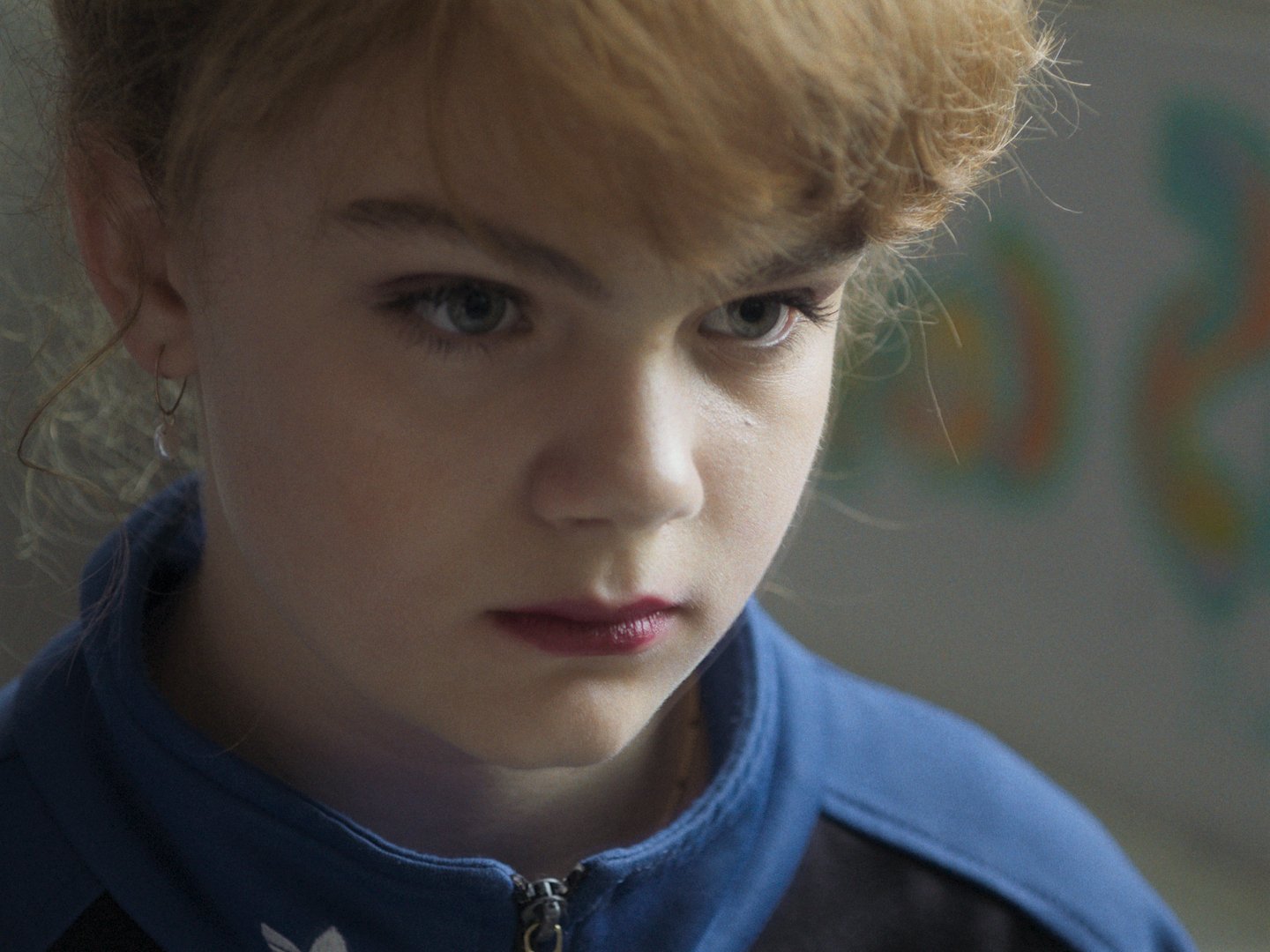

Directed by: Emmanuelle Nicot
Starring: Zelda Samson, Alexis Manenti, Fanta Guirassy
Language: French (with subtitles)
Runtime: 83 minutes
Available for purchase or rent on Amazon Prime Video.
Final Score: ★★★★★
A stunning, intimate portrayal of recovery after child sexual abuse (CSA), anchored in empathy, restraint, and emotional truth. Please note, this review contains spoilers.
Synopsis
At 12 years of age, Dalva´s life is plunged into chaos when her biological father whom she lives with in a suburban home in France, is arrested for kidnapping and incest. It turns out that Dalva was taken from her mother when she was just 5, in violation of the legal visitation agreement that had been conferred to her parents upon their divorce. At the time of the arrest, Dalva lives with her father; dresses, talks, and acts like a grown woman. She believes they are in love—until she is separated from him and placed in a group foster home. What follows is not a typical courtroom drama, but something more intimate and rare: a survivor’s gradual unlearning of child sexual abuse and rediscovery of her own lost childhood.
A Study in Internal Liberation
The strength of Love According to Dalva lies not in what it shows, but in what it withholds. Director Emmanuelle Nicot avoids sensationalism entirely—there are no flashbacks, no overt depictions of violence. Instead, we follow Dalva’s transformation in real time, as she sheds the adult persona that her father groomed her into, and tentatively reconnects with peers, caregivers, mother, and eventually, herself.
Zelda Samson, in her screen debut, gives a remarkably restrained and heartbreaking performance. Dalva’s stiffness, her hostility toward her caretakers, the hate of her mother for the abandonment, and her confusion about boundaries are all portrayed with naturalism and depth.
How the Film Addresses CSA
Unlike many films on the subject, Love According to Dalva refuses to center the abuser. The father is present only briefly, during the initial arrest, the prison visit and the first court hearing. This framing centers around Dalva’s experience, not her perpetrator’s justifications.
Key Themes
- Grooming and identity distortion: Dalva believes she was in a loving, consensual relationship with her father—showing how profoundly CSA can distort a child’s sense of self and normalcy.
- The Difference between love and sex: Dalva is unable to discern the difference between love and sex, and so, she is continuously susceptible to additional sexual abuse.
- Narcissistic control: In one scene, Dalva struggles to purchase her own clothes and in another, she pushes her mother away, after having been told she was abandoned; providing raw evidence of the unbalanced power her father had over her at such a young and vulnerable age.
- Peer bullying: Dalva stands out at school because of her sexualized presentation and gets into physical altercations upon hearing other children describe crass scenes of pedophilia with her father.
- Reclaiming a lost childhood: The heart of the film lies in watching Dalva reconnect with her age—dancing with another foster home boy, running on the playground with friends, learning how to walk like her roommate.
- Understanding what is real: Dalva finally begins to face reality through the bond formed with her new roommate and friend Samia, a young black girl who must deal with her own trauma from having grown up with her mother being a prostitute.
- Shame and betrayal: Dalva’s emotional journey mirrors that of many survivors—grappling with misplaced loyalty, confusion, and the painful truth that what she believed was love was in fact abuse.
Other Trauma
The film does hint at potential further medical issues, such as the scene where Samia finds Dalva frantically trying to change the sheets on her bed after wetting them. She also makes an attempt at self-harm by hitting the back of her head on a bathroom wall after escaping from her first meeting with her mother. Otherwise, there is little information relating to other physical issues such as constipation, irritable bowel, headaches, insomnia, or other trauma induced body disorders.
The mother´s suffering is glossed over, as very little depth is provided on what we can assume had been years of silent pain, navigating the justice system attempting to regain access to her daughter. We can assume that at some point, Dalva´s mother becomes aware of the child sexual abuse her daughter has suffered over many years. This is compounded by the stark reality that the recently liberated Dalva wants nothing to do with her mother as evidenced in the scene of their first meeting whereby she pushes her mother to the ground and begins to hit her repeatedly. It is obvious from this and other information provided in the film that Dalva´s father focused on manipulating her for his own perverse sexual desires and promoted the false narrative that the mother abandoned them at an early age.
Why It Matters
Love According to Dalva is essential viewing in today’s context—especially as public awareness of CSA grows. It shows that recovery is not a dramatic courtroom climax but a slow, deeply personal act of re-humanization. Although the final scenes are comforting in the fact that Dalva´s pedophile father is held to account, and that Dalva looks to be inching closer to a more normal childhood with her biological mother, much is yet to be resolved. We do not know if or when she will be reunited with her mother or her family. Her mother´s live in boyfriend is the father of her young half-brother but we never get to know the young father and whether or not he is inclined to welcome Dalva into the new family or want any interaction with her at all.
In fact, the end of the movie is only the beginning of the many obstacles Dalva and her new family will be faced with as they all come to grips with the realization that she was a CSA victim of her own biological father from as long as she was capable of remembering. More likely than not, there will be constant reminders of that unfortunate time where childhood was stolen from her by the very man she should have trusted most, a betrayal of ultimate proportions. Furthermore, she and her eventual caregivers will have to deal with Dalva´s ongoing feelings of guilt, rage, depression and uncontrolled anxiety in addition to the common physical ailments associated with post-traumatic stress, including but not limited to gastrointestinal issues, eating disorders, insomnia, auto-immune diseases, excessive risk taking, and tendencies to self-harm.
Nevetheless, in a world where CSA is often discussed in abstract statistics or sensationalized headlines, this film offers a deeply human, survivor-centered narrative.
Verdict
Notwithstanding the focus on the initial phases after the CSA occurs, this work is a bold, tender, and visually poetic depiction of a child reclaiming her life after sexual abuse. Zelda Samson delivers one of the most honest performances of recent years, and Emmanuelle Nicot proves herself as a director of rare sensitivity and moral clarity.